Sir Francis Drake
Sir Francis Drake (born on 1540, died in 1596) is today remembered as one of the most famous Privateers that worked for the English Crown.
During his active years he fought relentlessly against the Spanish, winning countless battles against their ships and pillaging their harbors. One of
his most notable feats was his 1577-1580 circumnavigation of Earth, for which he received knighthood and many other honors from Queen Elizabeth. Before
dying in one of his many military campaigns, he forged for himself a reputation of absolute hero to the English and one of the greatest pirates to
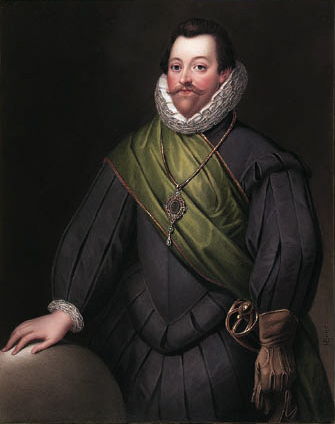
the Spaniards (which held the bounty on his head for over 6.5 million dollars by modern standards).
Francis Drake was born around 1540 in the Tavistock, Devonshire, England as a son of protestant farmers Edmund Drake and
Mary Mylwaye. During his youth the entire family moved to Kent where Drake became fascinated with the sea. At the
age of 13 he decided to follow his dreams and joined the crew of a small trading ship. After a while he rose through the ranks, eventually
earning himself a position of captain. In 1565 he finally sailed to the Caribbean with the ship given him by Sir John Hawkins where he intended to stay
out of the trouble and avoid pirates, privateers and the hostilities between Spanish and English. His peaceful trading days stopped when he was suddenly
attacked and robbed by Spanish Treasure Fleet. Enraged by their actions, Drake prepared for war and retaliation. During several next years he
attacked Spanish ships and harbors, earning himself a Spanish nickname El Draque (The Dragon). Some of his most
notable actions during that time period were siege of port of Nombre de Dios in 1573 (where he robbed the treasure from two wealthy Spanish ships) and
capture of Spanish Silver Train in 1573 (where he captured truly enormous treasure).
Temporary truce between England and Spain prevented the Drake from engaging in more bloodshed. Instead, Queen
Elizabeth
famous journey with a fleet of 5 ships and over 160 sailors. During his trip he raided many Spanish settlements and ships, but he also lost a sizeable
amount of sailors and ships. After crossing the Straits of Magellan (where lost two ships to the terrible storms) he journeyed across the pacific to the
Indonesia, Indian Ocean and Cape of Good Hope. With a crew of only 60 sailors and one ship filled with treasure, Francis drake finally returned to the
England on September 26, 1580. He received high honors and awards from many officials in his homeland, including Knighthood, position of Admiralty,
sizeable lands and more.
Five years later, a new war began between England and Spain, but this time great naval successes of Sir Francis Drake
(sacking of ports Santo Domingo, Columbian Cartagena and San Augustín fort) encouraged Spaniards to start planning the massive naval invasion of
England. To delay this plan Drake embarked on a daring plan - he suddenly appeared with his fleet in the ports of the Spanish cities Cadiz and Corunna where
he destroyed over 37 ships. This strategy gave the England over a year of additional time to prepare for the impending Spanish attack. That attack came
in 1588 where Drake managed to create key significant victories. His capture of the Spanish ship Rosario brought disarray into Spanish sailors (ship
carried their wages) and he was a part of the Battle of Gravelines.
Sir Francis Drake spent the remainder of his life fighting the Spanish on various fronts across the world. He finally met
his death by dysentery in Panama at the age of 55. He was buried at sea, dressed in a full armor. To this day, divers continue to search for his lead
coffin.